Description
Learning to tell time is important for several reasons, as it plays a crucial role in a child’s development and daily life. Children begin to learn time management and planning whereby they understand how to manage their daily activities (bed time, lunch time, after school activities etc).
Knowing how to tell the time encourages independence and responsibility, builds routine and structure for organization and stability.
Telling the time promotes cognitive development – numerical concepts, fractions and patterns, promotes problem-solving skills and a deeper understanding of numbers.
In summary, learning to tell time is an essential life skill that develops independence, structure, and a aids children with a deeper understanding of how the world around us works.
How to Wonder & Bloom
Practice telling the time by:
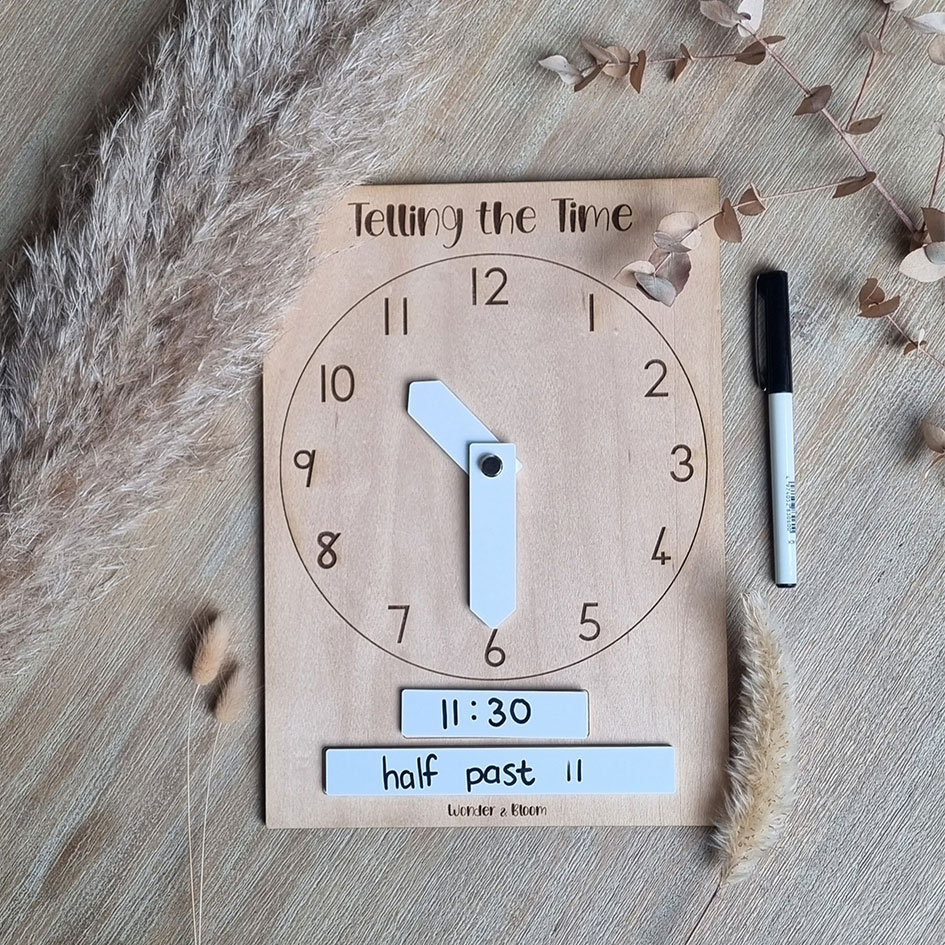
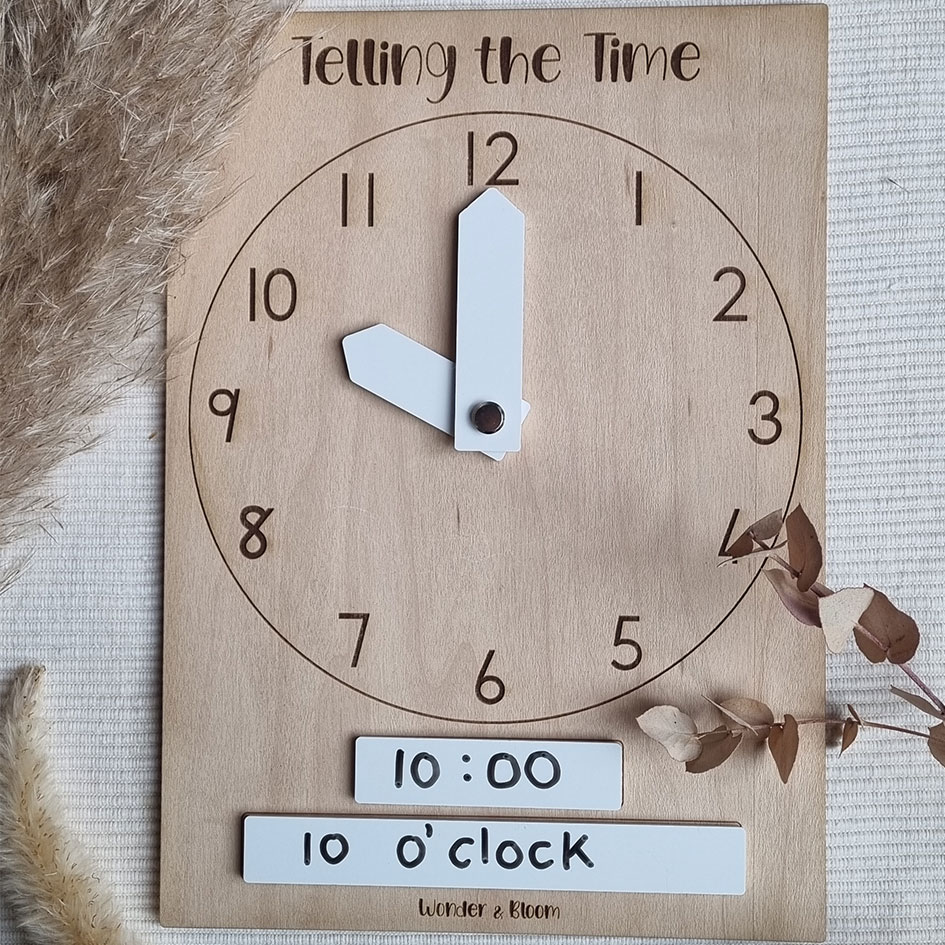
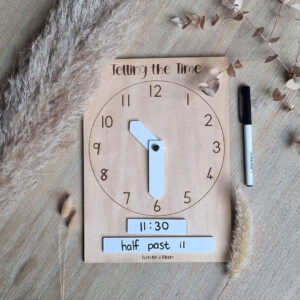
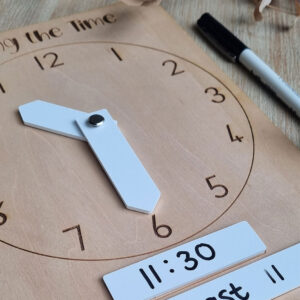
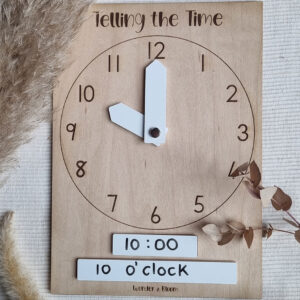
Moving the hands of the clock to a specific time. Write the time in the space below. For example; if the hour hand is on 1 and the minute hand is on 12, that means it is 1 o’clock. Write 1:00 in the top block and write it out “1 o’clock” in the block below
Another way of doing this is to get someone to write the time in the spaces provided (3:30) and now move the hands to display the correct time and write it out “half past 3”
What is Included
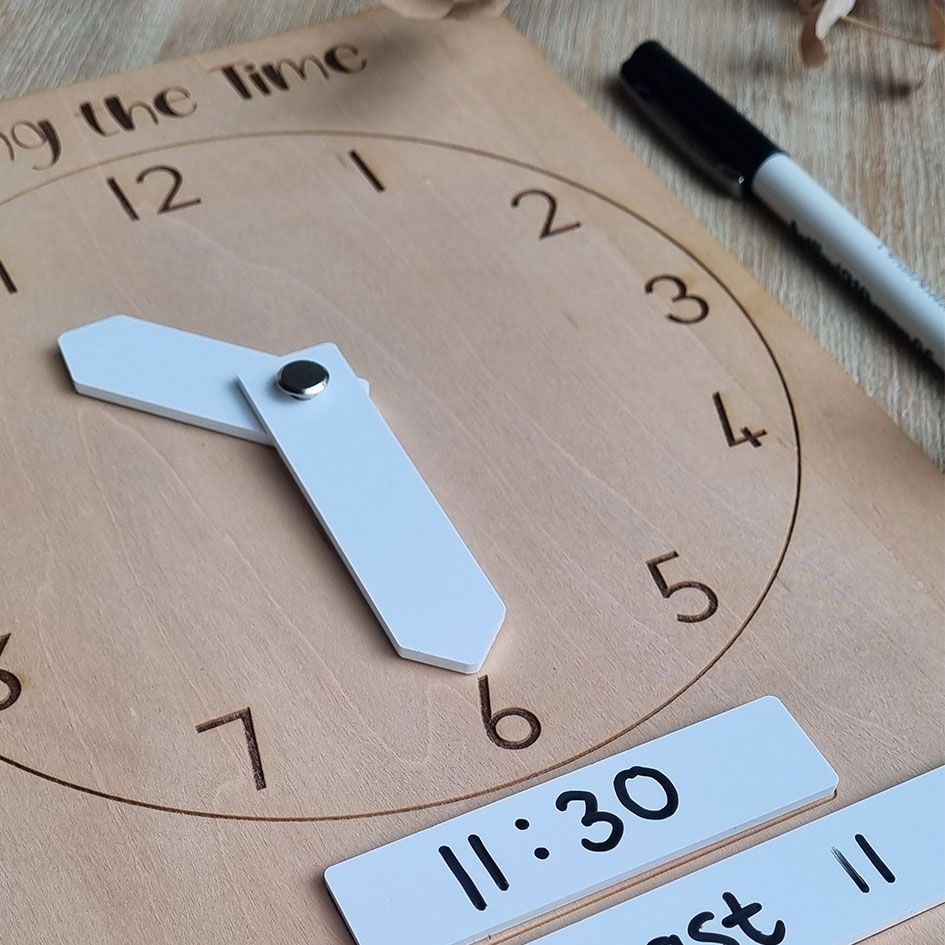
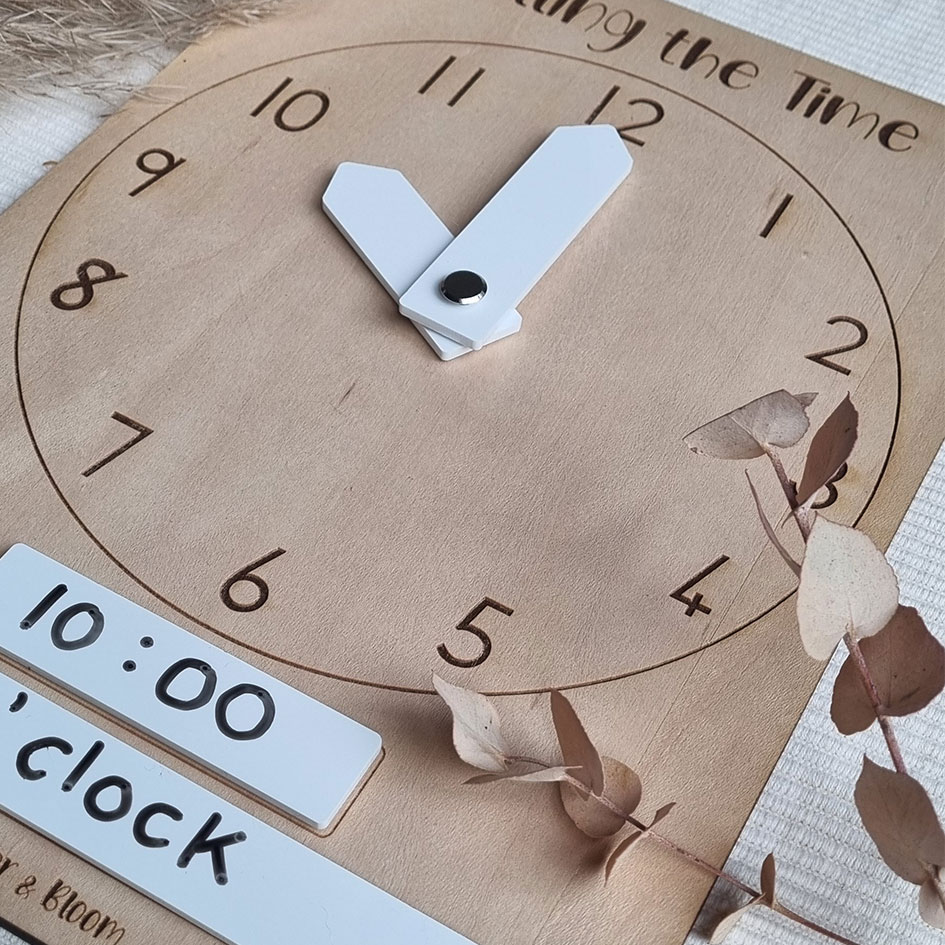
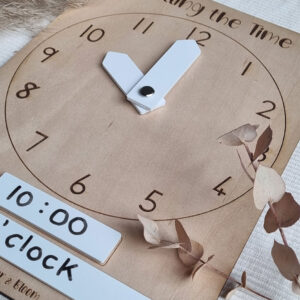
1 x Natural Wooden clock with white Perspex minute and hour hand
2 x White Perspex tiles for writing the time (digital & analogue)
1 x Whiteboard Marker
Board Size: 20cm x 28cm
Please note that all of our Bloom Boards are made from natural, locally sourced wood. Due to the inherent characteristics of the material, variations in colour, grain and texture are to be expected.
Educational Benefits
Educational Benefits of Wonder & Bloom Boards Include:
Multi-Sensory Learning: Wooden activities engage multiple senses, which helps children grasp and retain concepts more effectively.
Focus and Patience: The tactile nature of wooden activities promotes concentration and patience, especially when solving problems or completing tasks.
Fine Motor Skills: Manipulating wooden pieces helps develop dexterity and hand-eye coordination, both important for writing and physical tasks.
Communication skills: While engaging in wooden activities, children use language and communicate during activities – building on conversation skills, social skills and emotional expression
These wooden activities combine fun and hands-on learning, allowing children to grasp simple and complex concepts in English and Math in an engaging and effective way.




Reviews
There are no reviews yet.